

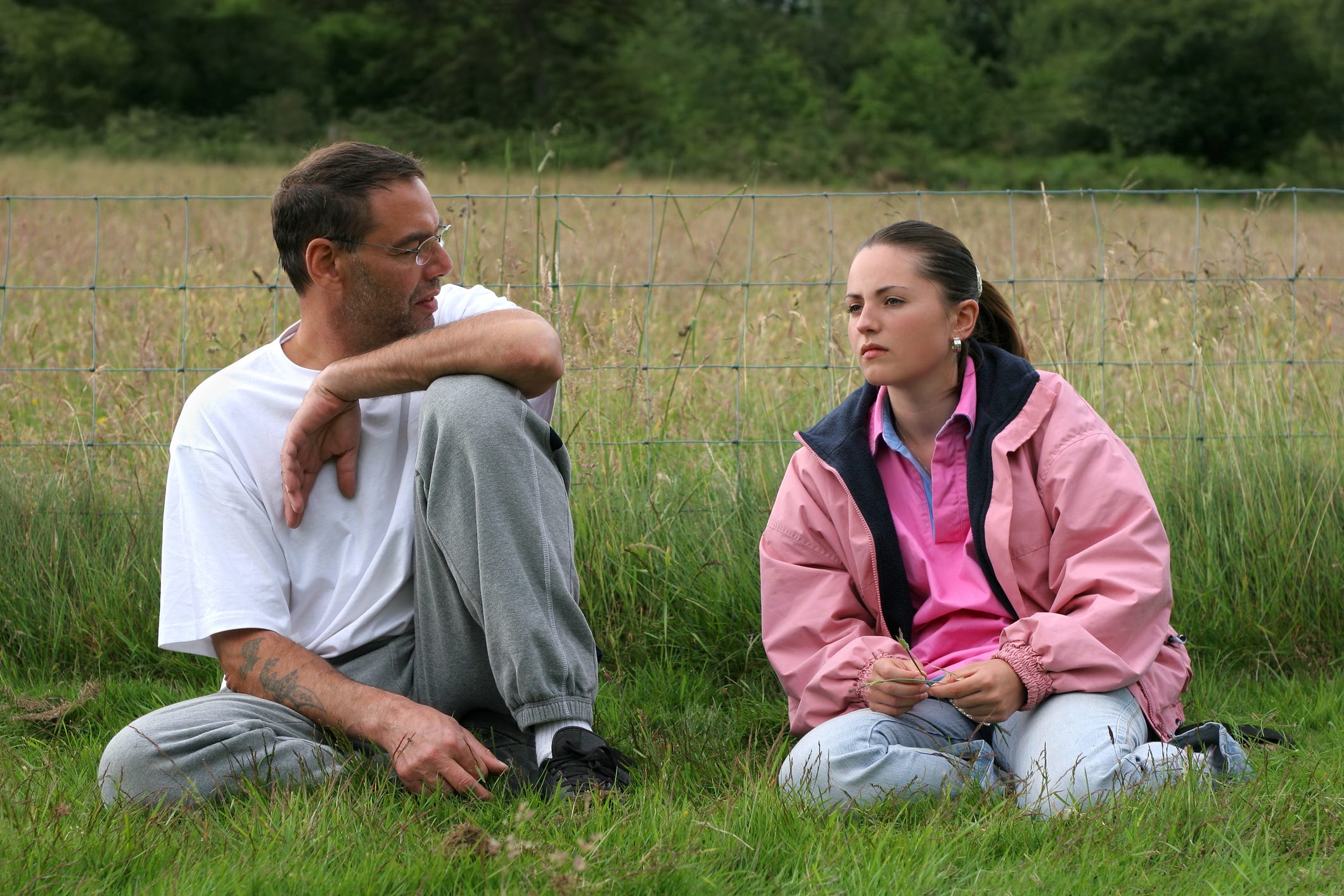
ID 1875260 | Two People Talking © Marilyn Barbone | Dreamstime.com
What our responses teach people to expect from us
We are teaching people how to behave around us all the time.
We teach them whether it is safe to disagree with us. Whether they should make a decision or wait for permission. Whether they can tell us something we don’t want to hear. Whether a mistake can be survived.
Most of this teaching happens without our realizing we’re doing it.
I had a client years ago who demonstrated this better than almost anyone I’ve known.
“Susan,” he used to say to me, “why won’t my employees do what I say when it should be clear to them that what I say is what I want?”
And I used to tell him, “Because it’s not what you want, and your employees know it. They see what you do, and that is teaching them what you actually want from them.”
He said he wanted empowered employees.
“You say you want empowered employees, and you don’t. Not really.”
He actually enjoyed telling people what to do. He thought he was right most of the time, and quite often, he was.
But every time he stepped in, supplied the answer, overruled a decision, or took control when the stakes rose, he taught his employees a lesson.
Don’t really decide. Wait for me.
His employees weren’t failing to listen. They were listening extremely well.
He would tell them he wanted them to make decisions. Then they’d make one he didn’t like, and he’d correct it. So, the next time, they were a little more likely to wait for him.
He was creating the very dependence that frustrated him.
And there was another problem that took us a while longer to untangle.
Even when his employees tried to anticipate what he wanted, they often got it wrong. How could they not? The picture of what “done right” looked like existed only in his head.
He knew what “finished,” “right,” or “good” looked like. They didn’t.
So they would make a decision, and he’d look at the result and think, Why on earth did they do it that way?
And back he’d go to telling them what to do.
What he really wanted was for his employees to get better and better at achieving the results he and his customers needed.
But to do that, they needed to understand what they were trying to accomplish, think about how to accomplish it, and know what a successful result looked like.
He thought he had told them what he wanted. He had told them what to do. Those aren’t the same thing.
More importantly, he hadn’t realized what he was teaching them.
Every time he took over, he taught them to wait.
Every time he corrected a decision they had made without helping them understand why, he taught them not to trust their own judgment.
Every time he gave them an answer instead of helping them think through a problem, he made it more likely they would come back to him for another answer.
The more he tried to make sure they got it right, the less capable they became of getting it right without him.
This happens everywhere, not just at work.
A parent says, “You can always tell me the truth.” But what does the parent teach the first time the child tells a truth that is difficult to hear?
If the response is anger, judgment, or punishment, the child has learned something. Next time, telling the truth may not feel quite so safe.
We say mistakes are how people learn. But if we humiliate a person for making one, what have we taught them?
Probably not to stop making mistakes. We may simply have taught them to hide the next one.
Someone disagrees with us, and we become defensive or angry. Maybe we’ve just taught that person that disagreeing with us isn’t worth the pushback and bad feelings.
A friend disappoints us, and we respond by withholding affection. What have we taught them about our love?
Our behavior is instructional whether we intend it or not.
People learn from us what matters, what we’ll tolerate, how disagreement works, whether mistakes are survivable, whether honesty is really welcome, and how we expect to be treated.
They learn what respect looks like. What trust looks like. What love looks like.
And because we know what we intended, it can be difficult to recognize what we actually taught.
My client knew he wanted independent, capable employees. He couldn’t understand why they kept waiting for him.
They were doing exactly what he had taught them to do.
That makes me wonder about the lessons the rest of us are teaching without knowing it.
What am I teaching people to do by the way I respond to them?
Am I teaching them to tell me the truth—or to protect me from it? To make decisions—or wait for permission? To admit mistakes—or hide them? To disagree with me—or tell me what I want to hear?
Everything you do teaches somebody something.
The question is: What are people learning from you?

Continue the Conversation
After writing this article, I am thinking about how difficult it can be to see what our own behavior is teaching.
We know what we intend. We know what we believe. We know what we meant.
Everyone else only knows what we actually do.
That makes me curious about something harder to see in ourselves.
Has someone’s response to you ever taught you what you could—or couldn’t—safely say or do around them?
I’d love to hear what happened and what you learned in the comments.
I also continue these conversations in Substack Notes, where I share the smaller observations and questions that often become future ValuesCrafting essays.
What kind of world do you want to live in?
ValuesCrafting believes every one of us has the capacity to help create a world where people are treated with dignity, trust, respect, kindness, and integrity. Live what you believe. And if this is the world you want, invite someone else to join us.