

Sometimes seeing differently is the beginning of solving differently.
A manager once asked me,
“How do I motivate my employees?”
It’s not a foolish question.
It’s simply an incomplete one.
Because hidden inside it is an assumption that the problem already lives inside the employees.
Before deciding that the answer is true, because it often isn’t, I’d want to know a few things.
What are the employees actually doing that leads you to conclude they’re unmotivated?
Has it always been this way?
When someone makes a mistake, what happens?
Who thrives here? Who doesn’t? Why?
When someone takes initiative, what happens?
What has the environment taught people about the value of speaking up, trying something new, or taking responsibility?
Sometimes the answer really is that you’ve hired the wrong person.
Sometimes the person truly has checked out.
Notice what has happened.
We haven’t decided that the employees aren’t the problem.
We’ve simply delayed the diagnosis until we understand the system.
But remarkably often, people are responding intelligently to the environment they’re experiencing.
If initiative is ignored, they stop taking initiative.
If mistakes are punished, they become cautious.
If decisions are arbitrary, they stop investing emotionally.
The manager began by asking how to motivate employees.
The more useful question became:
What have the employees learned about working here?
That question leads somewhere entirely different.
I realized this wasn't just a consulting question. It has shaped the way I think about almost every human problem.
The habit isn’t limited to management.
It follows us into every relationship.
How do I get my spouse to listen?
How do I get my adult child to call?
How do I get my friend to stop canceling?
How do I get Percy, my Papillon, to eat nutritious food?
The first question is almost always about changing someone else.
The more useful place to begin is asking whether we’ve correctly understood the situation we’re trying to change.
The way we name a problem determines where we look for the solution.
If we begin with the wrong diagnosis, even our best efforts may solve the wrong problem.
Sometimes, after looking more carefully, we discover that another person really is the problem.
Sometimes we discover that we are.
Most often, we discover that the problem isn’t located in one person at all.
It’s in the pattern between us.
And once we see the pattern clearly, we finally know where to begin.

I don't only think about questions like these in longer essays. They often begin as ordinary observations—a moment, an experience, or something I notice in my own life.
Throughout the week, I share many of those in Substack Notes. One from this week sparked a wonderful conversation:
I learned quite a lot today from an art class I didn’t attend.
I learned I don’t want to be anywhere at 9 a.m. No more. No way.
I don’t want to spend hours outdoors in the summer heat with rising humidity.
I don’t want to paint in a parking lot rather than in a natural spot just because my car and supplies are conveniently nearby.
I don’t want to spend the whole second day painting in the pouring rain or sitting in a classroom.
I don’t want to leave my dog Percy alone for hours at a time on multiple days.
And my aching feet have opinions of their own about standing and walking all over the county.
The interesting thing is that none of this means I don’t want to learn to paint.
Sometimes we give up something we genuinely want because we’ve mistaken one way of doing it for the thing itself.
I’m still going to paint. I just need to find a way of learning that fits the life I actually live.
I framed my first painting.
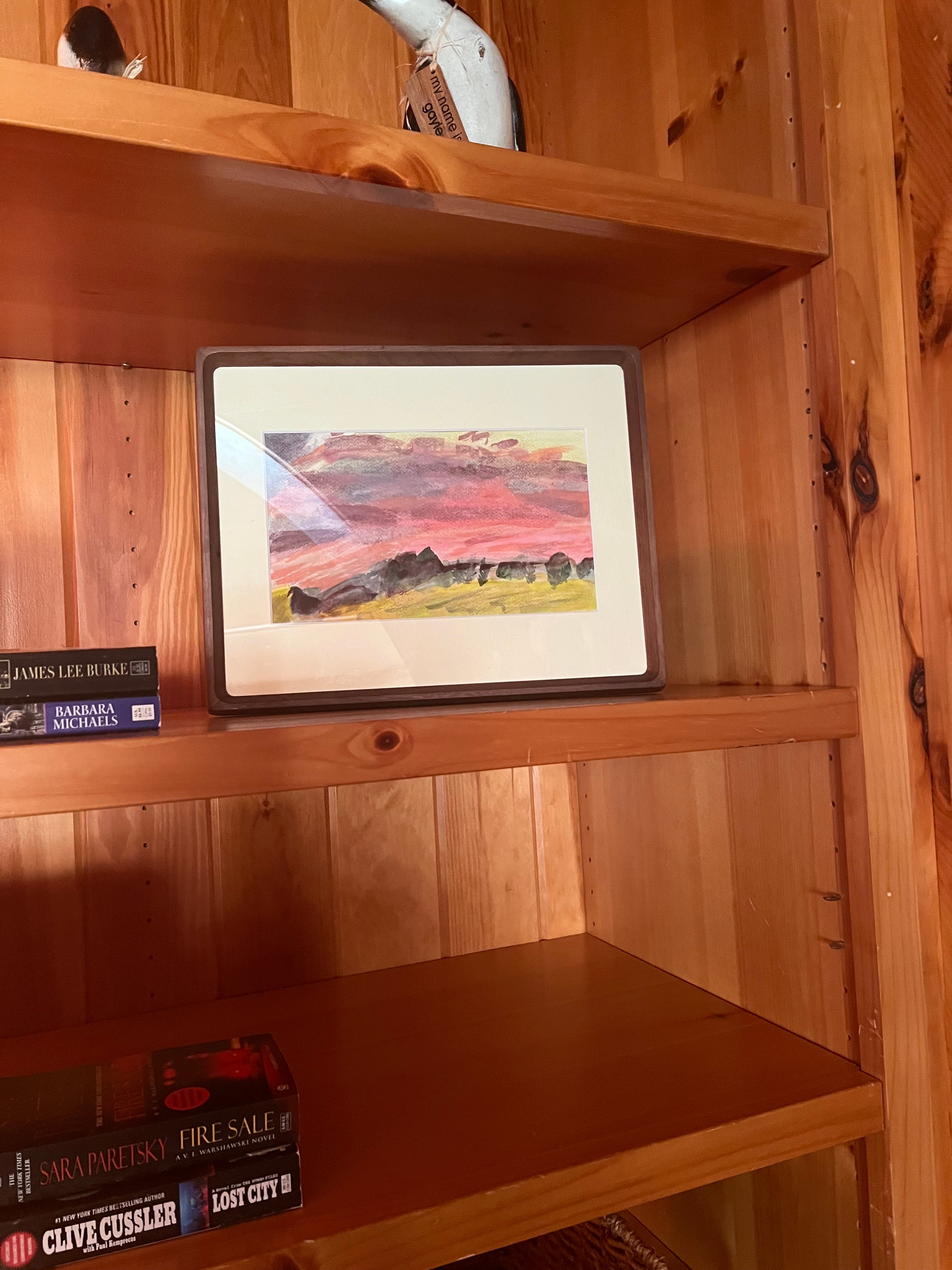
The conversation that followed reminded me why I enjoy writing Notes. Readers didn't talk about painting. They began sharing how they’re reshaping their lives to fit the people they've become.
I share more shorter reflections throughout the week in Substack Notes about values, ordinary life, Percy, books, beauty, and the questions that keep following me.
Has asking a different question ever changed the way you understood a difficult situation? I’d love to hear your story.