

ID 51342820 © Sabina Pensek | Dreamstime.com
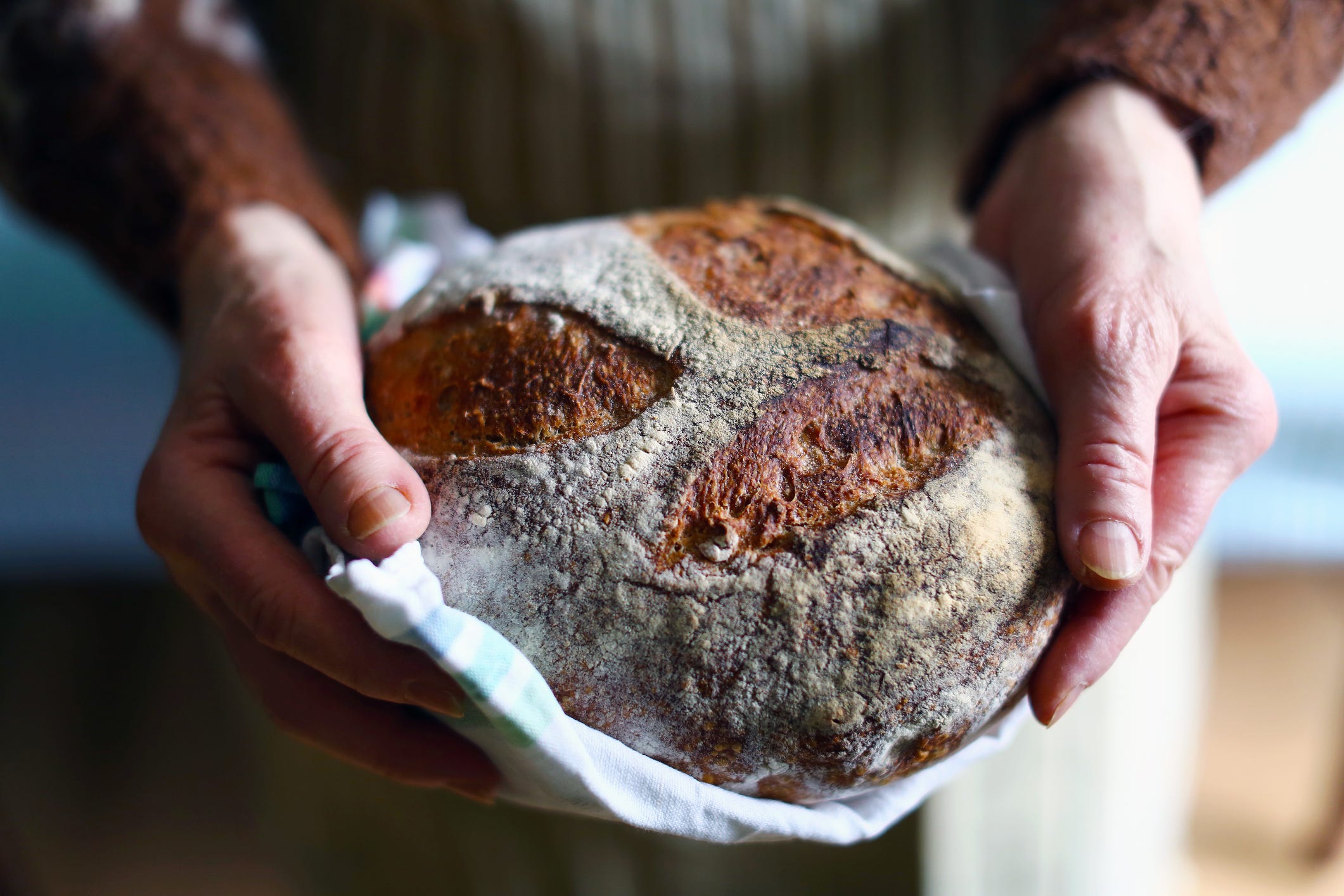
A loaf of bread and a welcome became thirty years of friendship.
I know what changed this summer.
And I hope to carry it with me for the rest of my life: a renewed sense of belonging in the everyday life I’ve been building since my husband Bill died.
I have known belonging in some wonderful places. An early memory takes me back to a big round table at The Howell House in the seventies.
People from the growing town gathered for coffee from early to midmorning. The crowd was never quite the same, but it always included Barb and Norm, the owners and the heart of the downtown community. Frequently, the chief of police, the fire chief, the mailman, other nearby store owners, and I, who led adult education in Howell Public Schools’ community education program, joined them.
We were having coffee. More than fifty years later, I can still see that table and remember the people who came and went.
What did we experience on those mornings? Looking back, I recognize a sense of belonging that has stayed with me long after the coffee and the conversations.
The table was a place to return to. People expected to find each other there. We shared a town and an interest in what happened to the people in it.
We didn’t all have to become close friends for that table to matter.
The belonging we keep alive
I have been more fortunate than many.
My lifelong sense of belonging comes from my family. A bed has always been ready for me and my husband at the homes of my six siblings. We’ve spent more than seventy years maintaining the kind of closeness many families dream of having. It wasn’t always easy, and it did take effort.
Our nieces and nephews are continuing the traditions, and their children are joining in. That sense of family has reached across four generations in my lifetime.
Holidays, reunions, and our running text-message thread, “New Fam Group Chat” (renamed whenever another family member is old enough to join), keep us celebrating everything from birthdays to sports team wins and professional accomplishments. When I hear a ping, ping, ping going off on my phone, someone in the family is making our day.
I could easily say we are simply a close family. But when I look at what we do—and have done for a lifetime—I can see how we keep that closeness alive.
We make room for one another in our homes. We gather. We talk on the phone. We share news and respond to it. We take an interest in lives that are increasingly different from our own. A child’s accomplishment becomes something we all share and celebrate. The next generation participates in the traditions and carries them forward.
We keep giving one another reasons to feel like part of the family.
I know that family does not provide this experience for everyone. Some people have had to find or create that welcome elsewhere. I don’t take our belonging for granted.
But I also know how strongly we are committed to protecting that belonging. When arguments or differences threaten it, we work to find a way through—even when other family members need to intervene.
My question is how to cultivate more of that feeling in the rest of my life, for me, and perhaps for you, too.
When belonging is built into the day
At another stage of my life, my then-husband coached four sports, and I coached girls’ tennis. We had the wonderful sense of belonging that comes from interacting with families in a sports community. Shared activities brought us into one another’s lives regularly. We had something to do together and people we cared about in common.
Later, I found a strong sense of belonging at TechSmith, the company my husband and I built with our employees. In the early days, I’d wager many of our employees felt this, too. A measure of our success over the years was how that sense of belonging translated—and didn’t—as the company grew.
For Bill and me, stepping back from daily and weekly interaction changed our experience of that community. We still cared deeply about the people and the company. But we no longer participated in the same everyday way. We sought community. We looked at churches and other groups where people bonded over shared interests.
Ann Morgan, an artist and former TechSmith colleague, captured something I recognized immediately when she commented on my recent article about making friends again.
After moving to a new city and working remotely, she missed the parties, events, and day-to-day work on products people cared about. Deep friendships had developed alongside that work at TechSmith.
“Everyone always was just there. Sometimes even in my house.”
Now, finding her art community takes texts, arrangements, and time set aside to meet.
I miss that easy togetherness, too. Work supplied so much of my interaction with people that I seldom had to think about arranging more. But when our routines change, we discover how much belonging those routines contributed.
My niece Michelle offered a thought that helps me understand these changes. Her faith leads her to believe that some people accompany us for a lifetime, while others share a particular season. She sees purpose in both.
I think about that when I remember the Howell House table and the families from our sports years. Those communities belonged to particular chapters of my life. I am no longer spending time among those people, but the belonging was real. It remains part of my history—and my loving memory.
At TechSmith, the community continues, while my place in its daily life has changed. I can cherish what we shared and miss it, too, while still getting together for lunch with our HR team when schedules allow.
Retirement, a move, a change of work, children growing up, or the death of someone we love can change the places where we regularly encounter our people. Knowing how belonging once felt doesn’t automatically tell us where to find it next.
Someone has to make room
This summer, I accepted my neighbor Denise’s invitation to join a Bible study. I am not a natural group attender. But those mornings became part of my summer, and the women became people I look forward to seeing again.
When I wrote about making friends, Jolene Crum, a member of our study group, shared what she had learned through living in ten homes in seven states over nearly forty-three years of marriage.
Friendship, she said, takes both the willingness to risk rejection and the intention to keep reaching out. I asked what had helped her move from meeting people to feeling that she belonged.
Her answer helped me understand my own summer.
“Belonging happens when others also choose to engage more deeply.”
In St. Charles, Illinois, a neighbor welcomed Jolene within days of her arrival, bringing a loaf of bread from a local bread maker. Jolene sensed the possibility of friendship and responded. Coffee dates, lunches, children’s play dates, and dinners with their husbands followed. More than thirty years later, they still reach out by phone and see each other when they can.
A loaf of bread didn’t maintain a friendship for thirty years. It opened the door. Both women kept choosing to walk through it.
I accepted an invitation this summer. Jolene and the other women made room for me. Both sides reaching out mattered.
Michelle described how much she enjoys finding common ground and making people feel included. She scarcely thinks of it as a special ability. It is part of how she genuinely responds to people. Not all of us do this as naturally as Michelle. We can learn, and with practice, reaching out will come more comfortably.
From the newcomer’s side, that willingness can make all the difference. When people already have their friends and familiar routines, someone arriving may find it difficult to see where she fits. Being invited into a conversation, asked about her life, or included in the next gathering gives her something to respond to.
Thinking about Michelle and the women this summer makes me consider my own part when I am among people I already know. I know how much a welcome can matter because I have needed one.
That is also something to remember when an effort to find friendship doesn’t lead where we hoped. We can offer our attention and make an invitation. We cannot supply the other person’s willingness. But one unanswered opening does not mean there is nowhere for us to belong.
Make room for more belonging
I do alone well. I value quiet, time to think, and the freedom to decide how I spend my day. I don’t want every hour filled with company.
I also want people with whom I share a part of life. People I am glad to see, who are happy to see me. A place at the table.
My family, including the family I gained through my union with Bill, continues to give me that sense of belonging. This summer reminded me that I can find more of it, too. Even now. Even as I learn to live without Bill.
We can develop belonging at any stage of life. The form may change, and finding it may ask more of us than it once did. A familiar face, a brief conversation, or a shared activity can be worth welcoming before we know whether a friendship will follow.
And we can notice when we are in a position to make room for someone else. At the family gathering. In the workplace. Among the people who already know one another when a newcomer arrives.
Barb and Norm had their round table. My family has beds ready and a phone that keeps pinging. Jolene’s neighbor had a loaf of bread. Denise had an invitation.
I am renewing the practice of accepting those openings—and making some of my own.

Continue the Conversation
Can you remember when a group or a place began to feel like somewhere you belonged? What did you and the people there do that made the difference? I’d love to hear as much of your story as you feel comfortable sharing in the comments.
This piece grew partly from the conversation readers began as they commented on my recent article, How I’m Making Friends Again. Ann and Jolene shared experiences that helped me understand my own. Your experience may help someone else recognize a possibility in their life, too.

What kind of world do you want to live in?
ValuesCrafting begins with the belief that every person matters and that our ordinary choices help create the world we share.
Live what you believe. Create the world you want to live in.
I remember your family fondly in the way you described- and I love reading your articles,Susan. Happy Thanksgiving Donna Werk Inglis (Anna Stoffregens g.daughter)
Beautifully articulated as usual, Susan! Honored to play a part in your story. Long distance hugs 🥰!